
Nevada Eye Physicians — Macular Degeneration
Macular Degeneration Treatment in Las Vegas & Henderson
Age-related macular degeneration is a leading cause of vision loss in Americans over 60. Our physicians help slow or stop its progression.
- Diagnostic imaging including OCT and fluorescein angiography
- Anti-VEGF injection treatment for wet macular degeneration
- 6 Nevada locations for ongoing care
Know the Signs
What Are the Signs of Macular Degeneration?
Macular degeneration symptoms vary by type and stage.
The Procedure
What Is Macular Degeneration?
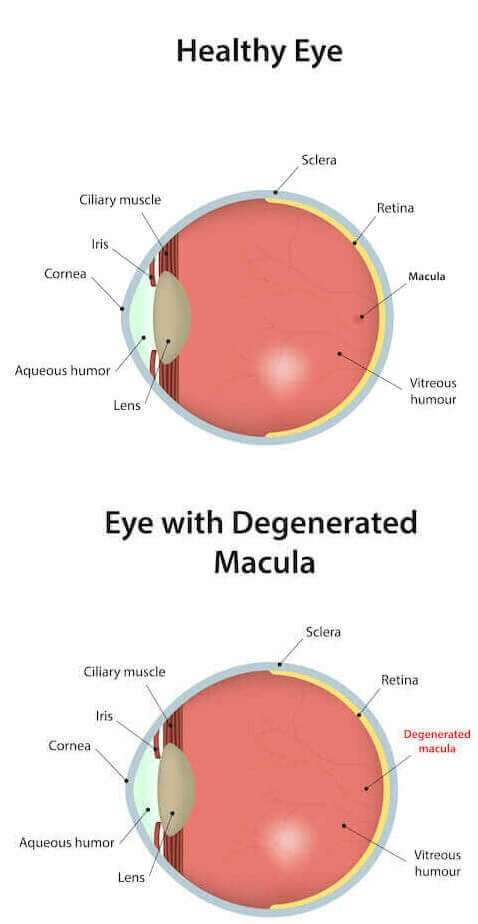
Macular degeneration happens when the macula, the center of the retina, begins to deteriorate. Because the macula provides the central vision you need for reading or driving, people with macular degeneration may gradually lose it. There is no formal cure, but it can be managed, and our physicians help slow its progression with diagnostic testing and customized treatment plans.
What causes macular degeneration, and who is at risk?
The exact cause is unknown, but age, smoking, and genetics play a role. High blood pressure, high cholesterol, obesity, fair skin, light eye color, and being female may also contribute. Because the onset is usually slow, regular eye exams help catch changes early.
How We Diagnose and Treat Macular Degeneration
Optical coherence tomography (OCT) captures high-resolution 3D images of the back of the eye, while fluorescein angiography highlights blood vessels using an injected dye to detect leaking or bleeding. While there’s no formal cure, anti-VEGF injections such as those used for wet macular degeneration can chemically shrink abnormal blood vessels and help improve central vision, with treatments repeated depending on severity.
80-90% Have the Dry Form
The more common, slower-progressing type of macular degeneration.
~10% Have Wet Form
Progresses rapidly and needs immediate treatment
OCT Imaging
3D retinal imaging used for diagnosis
Anti-VEGF Injections
Used to shrink abnormal blood vessels in wet macular degeneration
Patient Reviews
Two forms of AMD, with different urgency and treatment.
Dry vs. Wet Macular Degeneration
Understanding which type you have shapes both the monitoring schedule and the treatment plan.
Dry Macular Degeneration
~80-90% of cases
- Develops slowly, often over years
- No formal cure currently exists
- Has early, intermediate, and advanced stages
- Managed with monitoring and lifestyle factors
Slower progression
Wet Macular Degeneration
~10% of cases
- Abnormal blood vessels leak fluid into the retina
- Progresses rapidly
- Treated with anti-VEGF injections
- Early treatment helps protect remaining central vision
Requires prompt treatment
Diagnostic imaging is used to determine which type you have.
From diagnosis to ongoing management.
Your Macular Degeneration Care Journey
1
Diagnosis
- Discuss vision changes and central vision symptoms
- Review age, smoking history, and other risk factors
2
Diagnostic Imaging
- OCT imaging to capture detailed retinal images
- Fluorescein angiography if wet AMD is suspected
3
Treatment
- Anti-VEGF injections for wet macular degeneration
- Monitoring and lifestyle guidance for dry macular degeneration
4
Ongoing Monitoring
- Regular follow-up exams to track any progression
- Repeat injections as needed based on severity
What to Expect
Expected Macular Degeneration Outcomes & Recovery
What to expect after macular degeneration care.
What Patients Can Expect in the First 30 Days
- There is currently no formal cure for macular degeneration
- Dry AMD develops slowly, often over years
- Wet AMD can progress rapidly and needs prompt treatment
- Anti-VEGF injections are typically repeated over time
- Regular eye exams track changes since early symptoms can be subtle
Informed Care
SAFETY & RISK CONSIDERATIONS
Understanding the safety profile of macular degeneration care.
Safety Profile
- Diagnostic imaging (OCT) is non-invasive
- Fluorescein angiography dye injection is used only when clinically appropriate
- Treatment intensity is matched to whether you have wet or dry AMD
Possible Side Effects
- Anti-VEGF injections may cause temporary eye discomfort, redness, or watering
- Fluorescein dye can temporarily discolor skin or urine
- Vision loss that has already occurred cannot always be reversed
How We Minimize Risk
Routine Eye Exams
Since AMD's onset is often slow, regular exams catch changes before major vision loss.
Advanced Imaging
OCT and fluorescein angiography detect subtle retinal changes early.
Risk Factor Awareness
We discuss age, smoking, and other known risk factors as part of your care plan.
Why Nevada Eye Physicians
Why Choose Nevada Eye Physicians for Macular Degeneration
Early diagnosis, ongoing management.
Advanced Retinal Imaging
OCT and fluorescein angiography detect changes before major vision loss.
Anti-VEGF Treatment
In-house injection therapy for wet macular degeneration.
6 Nevada Locations
Convenient access for the ongoing monitoring AMD requires.
Our Team
Meet Our Team
Our physicians provide diagnostic imaging and ongoing management for patients with age-related macular degeneration.






Find Us
Macular Degeneration in Las Vegas & Henderson
Find care at one of our six Nevada offices, including Boulder City and Pahrump.
Common Questions
Frequently Asked Questions
Answers to common questions.
Is there a cure for macular degeneration?
There is currently no formal cure, but treatments can slow progression and, for wet AMD, help improve central vision.
What's the difference between wet and dry macular degeneration?
Dry AMD is more common and progresses slowly; wet AMD is less common but progresses rapidly and needs prompt treatment.
Who is at risk for macular degeneration?
Risk increases with age, smoking, and genetics. High blood pressure, high cholesterol, obesity, fair skin, light eye color, and being female may also contribute.
Ready When You Are
Schedule Your Free Consultation
Most patients see results within 24 hours. Consultations are available at all six locations, online scheduling takes less than two minutes.