
Nevada Eye Physicians — Dry Eye
Dry Eye Treatment in Las Vegas & Henderson
If your eyes feel dry, gritty, or irritated, our eye doctors can diagnose the cause and recommend the right treatment.
- Extensive experience diagnosing dry eye
- Treatment plans matched to your specific cause
- Serving Las Vegas, Henderson, and Southern Nevada with 6 Locations
Is This Right for You?
What Are the Signs of Dry Eye?
Common signs that you may have dry eye syndrome.
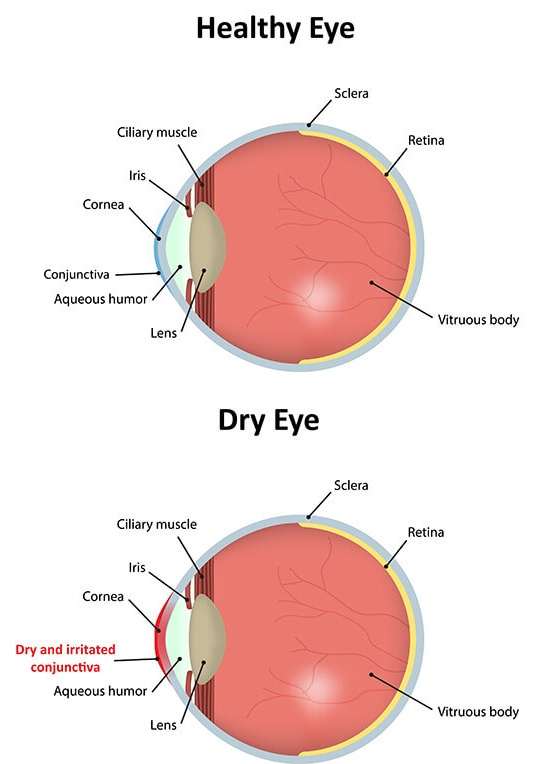
Identifying the cause is the first step to relief.
What causes dry eye syndrome?
Dry eye happens when you don’t make enough tears or the tears you make are poor quality. Healthy tears have three parts: oil, water, and mucin. Risk increases after age 50, with conditions like rheumatoid arthritis and lupus, with medications such as antidepressants, birth control, antihistamines, and decongestants, and with contact lens wear. Meibomian gland dysfunction, where the glands release too little oil, makes tears evaporate faster and becomes more common after 50. If you take a medication that causes dry eyes, talk with your doctor, who may change your dose or recommend eye drops.
How We Diagnose and Treat Dry Eye
Dry eye happens when the eye doesn’t produce enough tears, or when tears are missing one of their three key components: oil, water, or mucin. Our eye doctors evaluate contributing factors including age, medications, contact lens wear, and meibomian gland function to determine the right treatment path, from over-the-counter drops to prescription therapy.
3 Tear Components
Oil, water, and mucin all have to be present for healthy tears.
Age 50+
Higher risk group, since tear production naturally declines with age.
Nightly Option
Thicker moisturizing gels available for severe overnight dryness.
MGD Evaluation
Meibomian gland dysfunction is checked as a common underlying cause.
Patient Reviews
Matching the treatment to how severe your symptoms are.
At-Home Care vs. In-Office Treatment
Many patients start with home care; more persistent cases benefit from an in-office evaluation.
At-Home Care
For mild, occasional dryness
- Over-the-counter artificial tears
- Moisturizing gel at bedtime
- Humidifier use at home
- Screen breaks every 20 minutes
- For mild, occasional dryness
First line of relief
In-Office Evaluation
For persistent or worsening symptoms
- Meibomian gland function check
- Review of medications and contact lens habits
- Treatment plan matched to your cause
- Ongoing monitoring and adjustment
Recommended if home care isn't enough
Your eye doctor will recommend the right starting point based on your symptoms.
From first symptoms to lasting relief.
Your Dry Eye Care Journey
1
Symptom Review
- Discuss dryness, grittiness, or irritation you've noticed
- Review medications, contact lens habits, and environment
2
Cause Evaluation
- Check tear quality and meibomian gland function
- Identify whether oil, water, or mucin production is the issue
3
Treatment
- Start with over-the-counter drops or a nighttime gel if mild
- Your doctor recommends next steps if symptoms persist
4
Follow-Up & Adjustment
- Track symptom improvement at a follow-up visit
- Adjust treatment plan based on how your eyes respond
What to Expect
Expected Dry Eye Outcomes & Recovery
What to expect after dry eye care.
What Patients Can Expect in the First 30 Days
- Over-the-counter artificial tears relieve mild symptoms for most patients
- A humidifier can help during dry winter months
- Sunglasses reduce UV exposure that can worsen symptoms
- Taking screen breaks every 20 minutes reduces eye strain
- Quitting smoking lowers dry eye risk
Informed Care
SAFETY & RISK CONSIDERATIONS
Understanding the safety profile of dry eye care.
Safety Profile
- Treatment starts with the most conservative option that fits your symptoms
- Experienced eye doctors evaluate underlying causes before recommending therapy
- Patients on medications linked to dry eye are counseled on options with their doctor
Possible Side Effects
- Untreated dry eye can increase susceptibility to eye infections
- Severe dryness can affect reading, focus, and driving
- Discomfort may worsen with continued contact lens wear if untreated
How We Minimize Risk
Cause-Specific Evaluation
We check medications, contact lens habits, and gland function rather than treating symptoms generically.
Meibomian Gland Assessment
Identifying gland dysfunction early helps prevent tears from evaporating too quickly.
Ongoing Monitoring
Follow-up visits let us adjust your treatment plan as symptoms change.
Why Nevada Eye Physicians
Why Choose Nevada Eye Physicians for Dry Eye Care
Experienced diagnosis, personalized treatment.
Cause-First Approach
We identify what's actually driving your symptoms before recommending treatment.
Full-Spectrum Options
From at-home care to prescription therapy, matched to how severe your case is.
6 Nevada Locations
Convenient access to care across Las Vegas, Henderson, and beyond.
Our Team
Meet Our Team
Our eye doctors have extensive experience diagnosing and treating dry eye syndrome for patients across the Las Vegas area.


Find Us
Dry Eye in Las Vegas & Henderson
Find Dry Eye care at a Nevada Eye Physicians location near you.
Common Questions
Frequently Asked Questions
Answers to common questions.
What causes dry eye syndrome?
Insufficient tear production or poor-quality tears, often related to age, medications, contact lens wear, or meibomian gland dysfunction.
Is dry eye dangerous if left untreated?
Lack of tears can leave the eye vulnerable to infection and scratching, and severe cases can affect reading, driving, and daily comfort.
How can I prevent dry eye at home?
A humidifier, sunglasses, artificial tears, regular screen breaks, and quitting smoking can all help reduce symptoms.
Ready When You Are
Schedule Your Free Consultation
Most patients see results within 24 hours. Consultations are available at all six locations, online scheduling takes less than two minutes.