
Nevada Eye Physicians — Diabetic Retinopathy
Diabetic Retinopathy Treatment in Las Vegas & Henderson
Chronic high blood sugar can damage the retina's blood vessels. Routine eye exams catch diabetic retinopathy before symptoms progress.
- Comprehensive diabetic eye exams
- Advanced imaging for early detection
- Treatment options including laser and anti-VEGF injections
Know the Signs
What Are the Signs of Diabetic Retinopathy?
Diabetic retinopathy often has no early symptoms, which is why routine exams matter.
Diabetic retinopathy can also cause vision loss, so don’t wait for symptoms to schedule your exam.
The Procedure
What Is Diabetic Retinopathy?
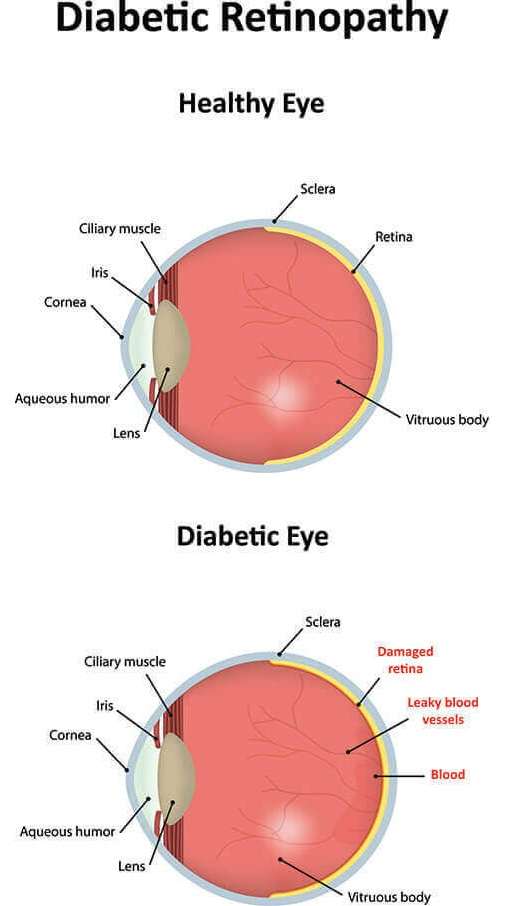
Diabetic retinopathy is damage to the blood vessels in the retina, at the back of the eye. It can occur in people with Type 1 or Type 2 diabetes and is caused by chronic high blood sugar. The damaged vessels can leak or swell, and new, abnormal vessels can grow on the retina. Without treatment, it can lead to blindness. It can also cause diabetic macular edema, where fluid builds up in the macula, the central part of the retina.
How We Diagnose and Treat Diabetic Retinopathy
We use a visual acuity test, tonometry to measure eye pressure, pupil dilation for a clear retinal view, and optical coherence tomography (OCT) to capture detailed images of the retina. In certain cases, fluorescein angiography highlights blood vessels to check for leaking or damage. Treatment may include corticosteroids to reduce inflammation, laser treatment to target leaking vessels, or anti-VEGF injections to block abnormal blood vessel growth.
Early Treatment Matters
Early diagnosis and proper treatment can greatly reduce the risk of blindness
OCT Imaging
Light-wave imaging captures detailed pictures of the retina
Anti-VEGF Injections
Used to block the protein responsible for abnormal vessel growth
Regular Screening
Recommended routinely for all diabetic patients
Patient Reviews
Two treatment paths for diabetic retinopathy.
Laser Treatment vs. Anti-VEGF Injections
Which approach (or combination) is right depends on where and how the retina has been affected.
Laser Treatment
Targets leaking blood vessels
- Uses focused laser energy on damaged vessels
- Helps prevent further leaking
- Performed in-office
- May require follow-up sessions
Reduces further leakage
Anti-VEGF Injections
Blocks abnormal vessel growth
- Targets the protein driving abnormal vessel growth
- Injected into the vitreous gel
- Often repeated based on severity
- Used alone or alongside laser treatment
Injected directly into the eye
Your physician will determine the best treatment plan based on your specific diagnosis.
Routine screening protects vision before symptoms appear.
Your Diabetic Eye Care Journey
1
Routine Screening
- Comprehensive eye exam for all diabetic patients
- Visual acuity test and tonometry to check eye pressure
2
Diagnostic Imaging
- Pupil dilation for a clear view of the retina
- OCT imaging, and fluorescein angiography if needed
3
Treatment
- Corticosteroids, laser treatment, or anti-VEGF injections as indicated
- Treatment plan matched to severity
4
Ongoing Monitoring
- Regular follow-up exams to track retinal health
- Coordination with your diabetes management team
What to Expect
Expected Diabetic Retinopathy Outcomes & Recovery
What to expect after diabetic retinopathy care.
What Patients Can Expect in the First 30 Days
- Some vision loss cannot be reversed once it occurs
- Controlling blood sugar is one of the best ways to slow progression
- Anti-VEGF injections and laser treatments may need to be repeated
- Regular diabetic eye exams are especially important during pregnancy
- Routine comprehensive eye exams help detect complications early
Informed Care
SAFETY & RISK CONSIDERATIONS
Understanding the safety profile of diabetic retinopathy care.
Safety Profile
- Diagnostic testing includes a standard eye exam and non-invasive OCT imaging
- Fluorescein angiography uses a dye injection only when clinically indicated
- Treatment plans are tailored to disease severity
Possible Side Effects
- Fluorescein angiography can cause temporary yellowing of skin or urine from the dye
- Anti-VEGF injections may cause temporary eye discomfort or redness
- Laser treatment may cause temporary blurred vision immediately after the procedure
How We Minimize Risk
Routine Diabetic Screening
Regular comprehensive eye exams catch retinopathy before symptoms progress.
Advanced Imaging
OCT and fluorescein angiography detect bleeding, leaking, or damage early.
Blood Sugar Coordination
We encourage coordinated care with your diabetes management team to slow progression.
Why Nevada Eye Physicians
Why Choose Nevada Eye Physicians for Diabetic Eye Care
Early detection protects long-term vision.
Advanced Retinal Imaging
OCT and fluorescein angiography detect damage before it progresses.
Coordinated Treatment
Laser therapy and anti-VEGF injections available in-house.
6 Nevada Locations
Convenient access for the regular screening diabetic patients need.
Our Team
Meet Our Team
Our physicians provide comprehensive diabetic eye exams and coordinated retinal care for patients across the Las Vegas area.







Find Us
Diabetic Retinopathy in Las Vegas & Henderson
Find Diabetic Retinopathy care at a Nevada Eye Physicians location near you.
Common Questions
Frequently Asked Questions
Answers to common questions.
How often should diabetics get an eye exam?
Many people with diabetes need a comprehensive eye exam at least once a year. Diabetic retinopathy often has no symptoms in its early stages, so your doctor will set a schedule based on your health.
Can diabetic retinopathy be reversed?
Vision loss that has already occurred can’t always be reversed, but early diagnosis and proper treatment can greatly reduce the risk of blindness. Keeping your blood sugar stable is one of the best ways to slow the disease.
Is diabetic retinopathy treatment painful?
Treatments like anti-VEGF injections and laser therapy are performed in-office and are generally well tolerated, with only temporary discomfort.
Ready When You Are
Schedule Your Free Consultation
Most patients see results within 24 hours. Consultations are available at all six locations, online scheduling takes less than two minutes.