
Nevada Eye Physicians — Comprehensive Eye Exams
Comprehensive Eye Exams in Las Vegas & Henderson
Many eye conditions show no early symptoms. Routine exams catch problems before they progress and create further complications.
- Amsler grid, visual field, and acuity testing
- Keratometry and refraction testing
- Recommended every 1-2 years for most adults
Is This Right for You?
When Should You Schedule an Eye Exam?
Regular eye exams matter even without noticeable symptoms.
If you see wavy, dark, blurry, or blank areas on the grid at home, call us right away at 702-896-6043 to schedule a follow-up.
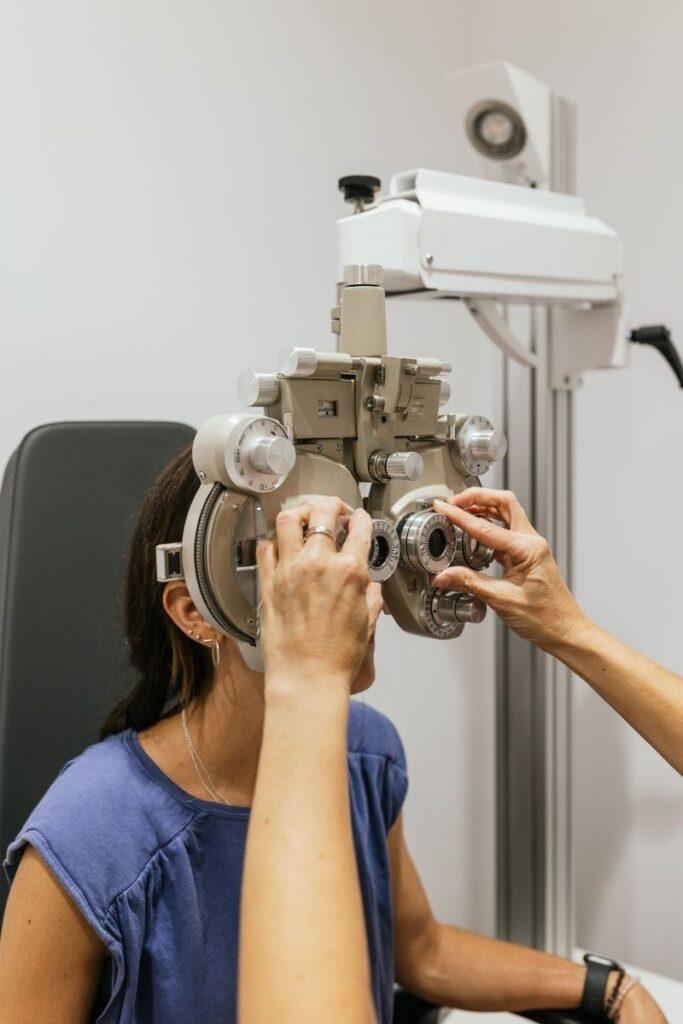
A series of tests build a complete picture of your eye health.
What Happens During a Comprehensive Eye Exam
Our comprehensive eye exams may include an Amsler grid test to detect macular degeneration, a visual field test to check for blind spots and conditions like glaucoma, a visual acuity test using a reading chart, keratometry to measure corneal curvature for contact lens fitting, and refraction to determine your eyeglass or contact lens prescription. Your doctor will explain each test and what to expect before it begins.
What Each Test Involves
Amsler Grid Test
The Amsler grid is a simple chart of lines with a dot at the center, used to detect age-related macular degeneration. You cover one eye and look at the dot. If any area of the grid looks wavy, dark, blurry, or blank, tell your doctor. The test is then repeated on the other eye.
Visual Field Test
A visual field test detects blind spots and other defects in your vision and measures the full range and sensitivity of your sight. It can reveal eye or optic nerve conditions, including glaucoma. In a common version, your doctor shines a steady or blinking light into your field of vision.
Visual Acuity
Visual acuity measures how clearly you see. You read letters from a standardized chart, one eye at a time, to find out whether you need glasses or contacts.
Keratometry
Keratometry measures the curve of your cornea by shining a circle of light on it and measuring the reflection. It’s used to fit contact lenses.
Refraction
Refraction finds the lens strength you need to correct nearsightedness, farsightedness, and astigmatism. Your doctor places a series of lenses in front of your eyes and asks which looks clearest, and may also use a retinoscope. It ensures you get the right prescription and can show whether you’re a candidate for refractive surgery.
5 Core Tests
Amsler grid, visual field, acuity, keratometry, and refraction
Every 1-2 Years
Recommended exam frequency for most adults
More Frequent With Age
Exam intervals often shorten as patients get older
Same-Day Diagnosis
Many conditions can be identified during a single comprehensive exam
Patient Reviews
Two reasons to schedule a comprehensive eye exam.
Routine Exam vs. Symptom-Driven Visit
Both use the same diagnostic tools, but timing and urgency differ.
Routine Comprehensive Exam
Recommended every 1-2 years
- Recommended even without symptoms
- Establishes a baseline for future comparison
- Catches conditions before symptoms appear
- Frequency may increase with age
Preventive care
Symptom-Driven Visit
When you notice a change
- For new blurriness, distortion, or vision changes
- Same diagnostic tools used as a routine exam
- May lead to a specific treatment plan
- Don't wait for your next scheduled exam if symptoms appear
Prompt evaluation recommended
If you're unsure which applies to you, our staff can help you schedule appropriately.
A series of tests build a complete picture of your eye health.
Your Eye Exam Journey
1
Discussion
- Review your medical history and any symptoms
- Your doctor explains each test before it begins
2
Diagnostic Testing
- Amsler grid and visual field testing
- Visual acuity, keratometry, and refraction testing
3
Diagnosis
- Your doctor reviews test results with you
- Identify whether any treatment or correction is needed
4
Follow-Up Plan
- Schedule your next routine exam, typically in 1-2 years
- Sooner follow-up if a condition needs monitoring or treatment
What to Expect
Expected Outcomes
What to expect after your exam.
What Patients Can Expect in the First 30 Days
- Many eye conditions have no symptoms until they've progressed
- Early detection generally means more nonsurgical treatment options
- Your doctor may provide an at-home Amsler grid to track changes
- Follow-up appointments are scheduled based on your results
- Medications, drops, or surgery may be recommended depending on findings
Informed Care
SAFETY & RISK CONSIDERATIONS
Understanding the safety of eye exams
Safety Profile
- All testing methods used are standard, non-invasive diagnostic tools
- Your doctor explains each test and what to expect before it begins
- Testing is tailored to your medical history and any symptoms you report
Possible Side Effects
- Pupil dilation (if performed) can cause temporary light sensitivity and blurred near vision
- No significant side effects are typically associated with standard vision and diagnostic testing
How We Minimize Risk
Comprehensive Testing
Multiple tests together build a fuller picture than any single test alone.
Age-Adjusted Frequency
Recommended intervals shorten as patients age or develop risk factors.
At-Home Monitoring Tools
An Amsler grid you can use at home helps catch changes between visits.
Why Nevada Eye Physicians
Why Choose Nevada Eye Physicians for Eye Exams
Thorough testing, clear explanations.
Comprehensive Testing
Multiple diagnostic tests build a complete picture of your eye health.
Care for All Ages
From pediatric exams to age-related condition screening.
6 Nevada Locations
Convenient access for routine and symptom-driven visits alike.
Our Team
Meet Our Team
Our eye doctors provide comprehensive diagnostic and vision testing for patients of all ages across our Nevada locations.

Find Us
Comprehensive Eye Exams in Las Vegas & Henderson
Find Eye Exams care at a Nevada Eye Physicians location near you.
Common Questions
Frequently Asked Questions
Answers to common questions.
How often should I get an eye exam?
It’s recommended that individuals of all ages get an eye exam at least every 1-2 years, with more frequent exams as you get older.
What is a visual field test for?
A visual field test checks for blind spots and other vision defects, which can reveal the presence and severity of conditions like glaucoma.
What is refraction testing?
Refraction determines the lens strength needed to correct vision errors and can also help identify whether you’re a candidate for refractive surgery.
Ready When You Are
Schedule Your Free Consultation
Most patients see results within 24 hours. Consultations are available at all six locations, online scheduling takes less than two minutes.